
The current situation in Kerala politics is perhaps best described as a case of the state's traditional two front politics now seeing a third front (the BJP) muscling in with the potential outcome being either a messy three front affair or a renewed endorsement of the two front pattern but with one of the old fronts compromised or quashed, observes Shyam G Menon.

The Bihar Assembly session was adjourned after a heated exchange between Chief Minister Nitish Kumar and leader of the opposition Tejashwi Yadav regarding the special intensive revision of electoral rolls. The situation escalated quickly, leading to unparliamentary language and a shouting match between members of the ruling and opposition parties.

'The quality of justice is directly linked to the quality of judges -- if that suffers, justice delivery suffers.'
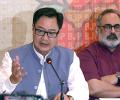
The Web portal of the Organiser, the RSS mouthpiece, published an article (withdrawn later) that the Christian community holds many acres of land, far more than Waqf property.'

'So my question was, 'What is it that you are proud of? What have you achieved? What is your contribution?' 'He had no answer.'
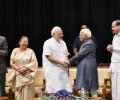
At an online book release event, former vice president Hamid Ansari lays to rest the controversies surrounding his tenure.
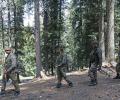
'I am ashamed that you and I were born into the same faith -- because we are nothing alike. My religion is humanity. The Islam I know teaches me to protect the innocent. Yours celebrates slaughter, you #&$#@#. 'My Islam teaches me to serve my nation. Yours tells you to tear it apart,' writes Major Dr Mohommed Ali Shah (retd).

'Arundhati Roy is like a ballerina performing on a high wire, cool, supremely at ease but conscious of all the adoring eyes on her,' notes P Vijaya Kumar.

On August 13, Muhammad Yunus visited the Dhakeswari Temple and reached out to the distressed Hindu community members in the wake of attacks on the minority communities.

"As long as PoK exists, terrorist activities will continue. I request Prime Minister Narendra Modi that if Pakistan does not hand over PoK, we must declare war against them," Athawale said, calling for another surgical strike against the neighbouring country.
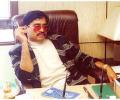
'6 shooters went to kill Dawood in Pakistan.'
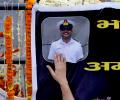
'No words can heal the wounds of a mother who lost her child, or a friend who lost their companion. But we must speak, we must feel, and we must remember.'
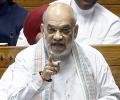
The Lok Sabha passed the Waqf (Amendment) Bill, 2025, with the ruling NDA defending it as beneficial for minorities while the opposition called it "anti-Muslim". All amendments moved by the opposition were rejected and the bill was passed with 288 votes in favor and 232 against. Union Minorities Affairs Minister Kiren Rijiju asserted that India is the safest place in the world for minorities, refuting claims of their insecurity.
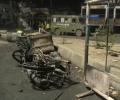
Protests against the Waqf Act turned violent in parts of West Bengal on Friday, with demonstrators setting ablaze vehicles, disrupting traffic and rail movement, and injuring several policemen. The unrest erupted in Suti, Murshidabad district, where protesters defied prohibitory orders, hurled stones at security personnel, and torched police vans and public buses during processions. Police responded with lathi charges and tear gas, while some officers were forced to seek refuge in a nearby mosque. Similar protests were held in Malda and Kolkata, prompting Governor C V Ananda Bose to direct the state government to take swift action against those responsible. The governor also contacted Union Home Minister Amit Shah and held discussions with Chief Minister Mamata Banerjee. The Waqf (Amendment) Bill, which was recently passed by both houses of Parliament, aims to improve the management of Waqf properties, safeguarding heritage sites and promoting social welfare.
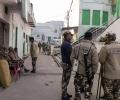
The Sambhal district administration has restored possession of land to three Hindu families who had fled the area during riots in the district in 1978, officials said.
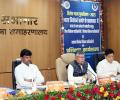
'The Election Commission is conducting the National Register of Citizens in Bihar through the backdoor.'
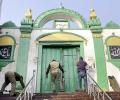
The latest issue of "Organiser", an RSS-linked magazine, has argued that the ongoing dispute over the Shri Harihar Mandir in Sambhal, Uttar Pradesh, is not about religious supremacy but about seeking "civilisational justice" by uncovering historical truth. The editorial, penned by Prafulla Ketkar, editor of "Organiser", contends that the debate should not be limited to a Hindu-Muslim perspective but should encompass a wider discussion on historical truths and social justice. The magazine further criticizes the Congress's handling of caste and religious issues, accusing it of whitewashing historical injustices and promoting a false narrative about Mughal rulers.

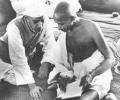
On the 83rd anniversary of the Quit India movement, Utkarsh Mishra recalls the conditions under which the Congress, led by Mahatma Gandhi, launched the final struggle for independence.

'He decides who will be Pakistan's prime minister, president, even provincial chief ministers.'
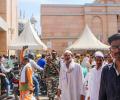
The Act prohibits conversion of any place of worship and provides for the maintenance of the religious character of any place of worship as it existed on August 15, 1947.

A body representing the 'Khadims' of the Ajmer dargah has condemned a plea in a local court that seeks to declare the shrine of Khawaja Gharib Nawaz as a temple, saying right-wing forces were trying to "isolate" Muslims and "disrupt" communal harmony in the country.
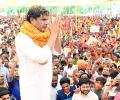
'Prashant Kishor is a businessman before he is a politician, and given that the expected average turnout for JSP candidates is 5,000 to 6,000 votes and since Bihar has a significant number of seats where the margin between the winner and runner-up falls within that range he will capitalise on exactly that to showcase his presence.'

The reality is that far from being friendless, India is better positioned in the world than at any point post-Cold War, asserts Shekhar Gupta.
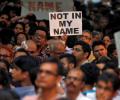
The Supreme Court on Friday agreed to hear a plea filed by a women's organisation seeking directions to states to take immediate action in consonance with a 2018 verdict of the apex court to effectively deal with incidents of lynching and mob violence against Muslims by cow vigilantes.
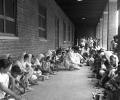
'We wouldn't have had to face all this had our national leaders taken care to select a place for Sindhis and sent us there, instead of sending us all over to settle in places where the locals didn't want us.' 'They could have partitioned Sindh and given us a Sindhi state from its two Hindu-majority districts.' 'Wasn't that the logic of Partition?'

These Muslim women are poor and illiterate but, with the devotion they display as they create handmade earthen stoves for Chhath, they strengthen the social fabric, says M I Khan.

Can ordinary citizens counter this backward march? Can peace activists ensure that the two communities retain their bonds? Do they have a choice, asks Jyoti Punwani.
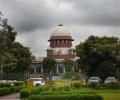
Commencing hearing on pleas challenging the constitutionality of the Places of Worship Act, 1991, the Supreme Court asked the Centre to reply to cross-pleas against or seeking implementation of statute.

"We live in a world where terrible misunderstandings are very common between religions...'

"I stand with the last person in the line. The exploited, marginalised and the persecuted. Their religion, caste or beliefs matter little to me," Gandhi said.
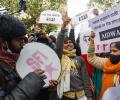
While most political parties have mostly stayed mum about the vicious anti-hate speeches -- reportedly calling for killing Muslims and former prime minister Dr Manmohan Singh -- made at the so-called 'Dharma Sansad' event in Haridwar from December 17-20 -- student organisations protested against the inflammatory and provocative speeches, calling for the immediate arrests of the accused.

A plea has been filed in the Supreme Court over alleged "blatant hate speeches" calling for killing Muslims and their social and economic boycott delivered at rallies in different states, including Haryana where recent communal clashes claimed six lives.
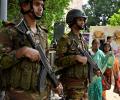
Army troops in Bangladesh intensified their patrols on the streets of Dhaka as the country witnessed rising tensions with the newly formed student-led National Citizen Party (NCP) accusing the military of political interference. The NCP staged protest rallies at the premier Dhaka University campus vowing to thwart at any cost a military-backed plot to rehabilitate deposed prime minister Sheikh Hasina's Awami League which was toppled seven months ago in a student-led violent street protest in July-August last year. A key leader of NCP, which was floated last month with widely assumed blessings of Professor Muhammad Yunus, accused the military of political interference over a proposal for inclusiveness that would allow Awami League to participate in the next elections. The military, which is now entrusted with maintaining nationwide law and order with magistracy power, however, did not enter the campus but continued their intensified patrol, particularly in the capital. The NCP convenor Nahid Islam said at the Muslim fast-breaking iftar party that the army or any other state institution had no "authority to propose or make decisions" about politics. He added that in no way "we will allow installation of another 1/11 government" in the country.

In an order that has left people surprised, the Uttarakhand high court has asked police to provide security to an interfaith live-in couple if they register their relationship within 48 hours under the Uniform Civil Code (UCC), which is yet to be implemented in the state.
'It could take the form of sporadic LoC violation through heavy artillery and mortar fire, focusing on border villages where the Hindu Dogra population is predominant.'
The 'mediation' by the United States from behind the scene on the diplomatic track appears to be once again working, which calls on both Delhi and Islamabad to show restraint and pull back from a military confrontation, notes Ambassador M K Bhadrakumar.

'This was a decision taken and executed by Prabhakaran and his intelligence chief Pottu Amman. Both were convinced that the assassination would not be linked to them.'

Usman Australia's Usman Khawaja was reprimanded by the International Cricket Council (ICC) on Thursday for sporting a black armband after the global body's rules prevented him from wearing shoes with messages of support for Gaza in a Test against Pakistan.

President-elect Donald Trump urged his supporters to donate to Democrats to help them overcome the 'financial strain' in the aftermath of the general elections.
